Global X Predicts Data Center Energy Surge to 194 GW by 2035
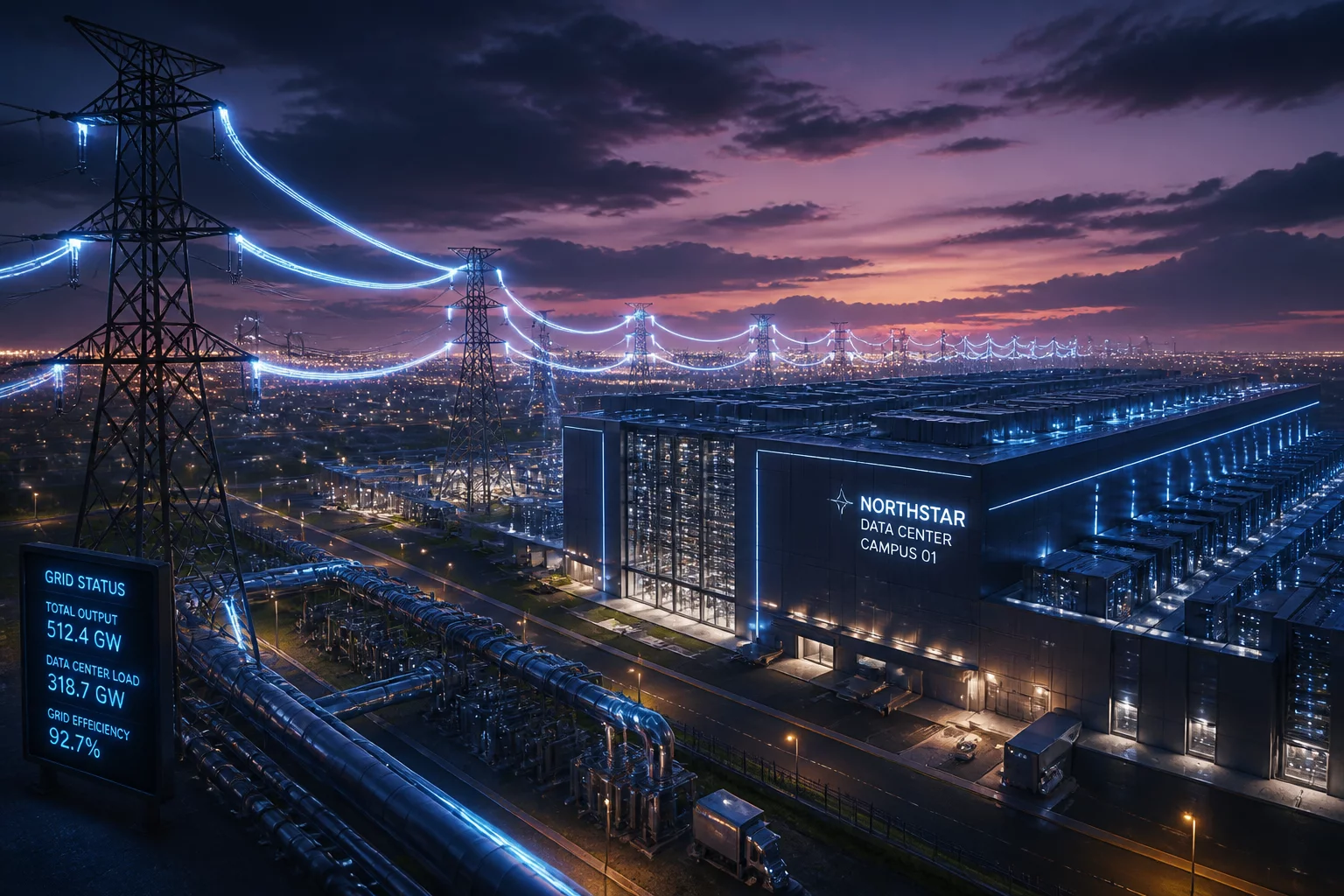
Exponential demand for artificial intelligence workloads and hyperscale cloud infrastructure is poised to quadruple data center electrical load across global power grids over the coming decade.

Primary Quantitative Thesis
Projections model a compound annual growth rate of over 15% in mission-critical computational power draw, escalating global data center electricity absorption from approximately 48 GW today to 194 GW by the close of 2035.
1. Strategic Overview and Market Context
The global race to scale artificial intelligence is running straight into physical limitations on the power grid. A comprehensive research publication from Global X outlines a profound realignment of industrial electricity demand, projecting that global data center energy draw will surge to 194 gigawatts (GW) by 2035. As high-density GPU clusters replace traditional server architectures, power density per rack is jumping from historical averages of 8 to 10 kW up to 60 to 100 kW per rack.
This structural transformation shifts the bottleneck of technological expansion from semiconductor fabrication to power generation, transformer capacity, and transmission interconnects. Utilities and independent power producers are negotiating direct long-term off-take agreements with hyperscalers, ensuring baseload reliability while driving heavy capital expenditure across electrical equipment supply chains.
“The decisive competitive moat in next-generation artificial intelligence is shifting from software architecture to physical power access and high-voltage grid interconnection rights.”
— Steven Grant, Research Briefing2. Data Breakdown & Historical Trajectory
Historical baseline data indicates that data centers consumed roughly 1.5% of worldwide electricity during the early 2020s. Under Global X modeling, this share could approach 6.5% of total generation in key developed markets by 2035. The acceleration is marked by three clear inflection points across regional deployment:
- North American utility territories are absorbing accelerated interconnection requests totaling dozens of gigawatts in pipeline commitments.
- Next-generation cooling technology is transitioning rapidly from traditional air systems to direct-to-chip liquid cooling systems.
- Behind-the-meter small modular reactors and co-located geothermal solutions are moving from speculative pilots into funded balance-sheet allocations.
Utility commissions and grid operators are reassessing reserve margins to prevent local supply imbalances. Consequently, companies with secured multi-year power purchase agreements (PPAs) and proximity to robust substations are trading at noticeable valuation premiums.
3. Capital Deployment & Scenario Analysis
Institutional capital allocators are increasingly structuring multi-asset portfolios to capture upside along the entire electrification value chain. This includes regulated utilities expanding their rate bases, specialized infrastructure real estate investment trusts, high-voltage transformer manufacturers, and industrial turbine suppliers. Fixed equipment backlogs have expanded past three years, providing durable revenue visibility.
In downside stress tests involving tighter municipal zoning or transmission buildout delays, computational buildout may decentralize toward secondary power nodes with stranded renewable capacity. Regardless of geographical distribution, aggregate demand trajectories reinforce the fundamental thesis: the digital economy has become an energy-intensive industrial sector requiring unprecedented infrastructure reinvestment.
This report is compiled for journalistic inquiry and informational market documentation. Data points are current as of the date of publication and subject to subsequent institutional revisions.
Market Floor Discussion
2Contribute Market Observation
Share your empirical analysis or scenario review with the terminal network.
Tom H.
VERIFIED ANALYST MACRO VIEWEnergy consumption is the real bottleneck for tech expansion.
Kevin S.
VERIFIED ANALYST SEMICONDUCTORSStrategic alliances will be key for semiconductor growth.